What Is the Stock Market and How Does It Actually Work?
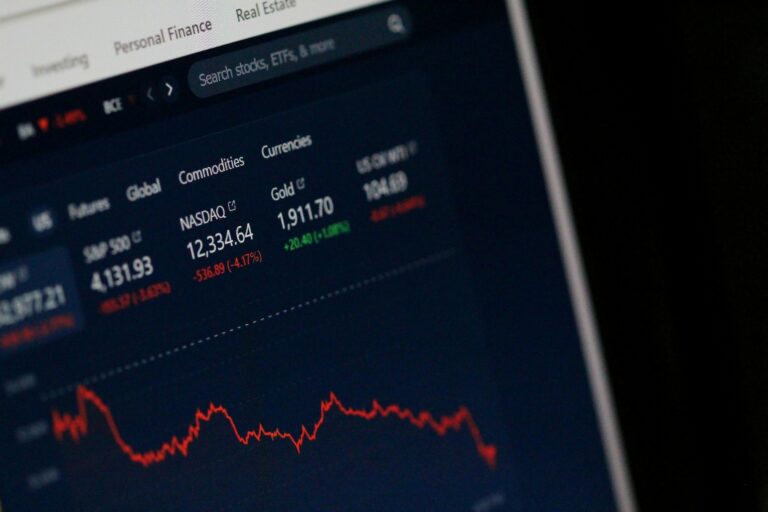
Most people have heard the phrase the market is up today on the news, or seen someone nervously checking their phone during a red trading session. But if you’ve ever wondered what any of that actually means — you’re not alone. The stock market can seem like a complicated world reserved for Wall Street traders in expensive suits. It isn’t.
At its core, the stock market is simply a place where buyers and sellers come together to trade ownership stakes in companies. Once you understand the basics, it starts to feel a lot less intimidating — and a lot more like an opportunity.
What Is a Stock, Exactly?
When a company wants to raise money — to hire staff, build a new factory, or expand into a new market — one way it can do that is by selling small pieces of ownership to the public. Each of those pieces is called a share, or a stock.
If you buy a share in a company, you become a part-owner of that business. You don’t get to walk in and tell the CEO what to do, but you do have a stake in how well the company performs. If the company grows and becomes more valuable, your shares are worth more. If it struggles, they’re worth less.
Think of it like buying a small slice of a pizza shop. You own part of that shop. If the shop does well and opens more locations, your slice becomes more valuable. If it closes down, you lose what you put in.
Where Does Trading Actually Happen?
In the United States, most stock trading takes place on two main exchanges: the New York Stock Exchange (NYSE) and the Nasdaq. These are the venues — think of them as organised marketplaces — where stocks are listed and traded every weekday from 9:30 a.m. to 4:00 p.m. Eastern Time.
The NYSE, founded back in 1792, is the largest stock exchange in the world by total market value. It’s historically associated with older, more established companies. The Nasdaq, launched in 1971, tends to be home to tech-heavy companies — Apple, Microsoft, and Amazon all trade there.
Most of today’s trading doesn’t happen on a physical floor — it happens digitally, through computers matching buyers and sellers in fractions of a second. When you place a buy or sell order through a brokerage app, that order gets routed to one of these exchanges almost instantly.
How Are Stock Prices Determined?
Stock prices move based on supply and demand. If more people want to buy a stock than sell it, the price goes up. If more people want to sell than buy, the price goes down. It’s the same basic principle behind the price of anything from concert tickets to secondhand cars.
What drives that demand? Lots of things — company earnings reports, economic news, interest rate changes, geopolitical events, and even general investor sentiment. When a company reports better-than-expected profits, investors often pile in, pushing the price up. When bad news hits, they may sell off quickly, sending the price down.
Over the long run, stock prices tend to reflect the underlying value of the company. In the short term, though, they can be driven by emotion just as much as by facts. This is part of why seasoned investors focus on long-term fundamentals rather than day-to-day price swings.
What Are Stock Market Indices?
You’ve probably heard the terms S&P 500, Dow Jones, or Nasdaq Composite. These are stock market indices — essentially, a basket of selected stocks used to represent the overall health of the market or a specific segment of it.
The S&P 500 tracks 500 of the largest publicly traded companies in the US. It’s widely considered the best single gauge of the US stock market overall, and most investment portfolios use it as a benchmark.
The Dow Jones Industrial Average (DJIA), on the other hand, tracks just 30 large companies and is one of the oldest indices in existence. It gets a lot of media attention, though many investors consider the S&P 500 to be more representative of the broader market.
Why Do Companies Choose to Go Public?
When a private company decides to list its shares on a stock exchange for the first time, it goes through what’s called an Initial Public Offering, or IPO. Going public lets the company raise large amounts of money from thousands of investors at once.
For the founders and early investors, it’s also an opportunity to sell their existing shares and realise the value they’ve built. For ordinary investors, an IPO is often their first chance to buy into a company they believe in.
That said, IPOs come with risk. Newly listed companies don’t have a track record as a public company, and their early stock price can be volatile. Many experienced investors prefer to wait and observe before buying into a recent IPO.
How Do Investors Actually Make Money?
There are two primary ways investors make money from stocks:
- Capital appreciation: You buy a stock at one price and sell it later for a higher price. The difference is your gain.
- Dividends: Some companies pay a portion of their profits directly to shareholders on a regular basis, typically every quarter. These payments are called dividends and can provide a steady income stream even if you never sell your shares.
Most beginner investors focus on capital appreciation — buying low, holding for the long term, and selling higher. Dividend investing tends to appeal more to those looking for passive income, such as people approaching retirement.
Is the Stock Market Risky?
Yes — and anyone who tells you otherwise is selling something. Stock prices can fall sharply, sometimes for reasons that have nothing to do with the companies themselves. Economic recessions, global crises, and sudden shifts in interest rates can all drag markets down.
But risk and reward are two sides of the same coin. Historically, the US stock market has returned an average of around 10% per year before inflation over the long term. No savings account comes close to that. The key word is “long term” — investors who stay invested through downturns have typically recovered and gone on to see positive returns.
The biggest risk for a beginner isn’t necessarily the market itself — it’s making emotional decisions, like panic-selling during a downturn or chasing a stock that’s already surged. Understanding how the market works is the first step toward avoiding those mistakes.
The Bottom Line
The stock market isn’t a casino, and it isn’t a black box reserved for financial experts. It’s a structured system where companies raise money and investors share in their growth. Understanding its basic mechanics — what stocks are, how exchanges work, what moves prices, and how returns are generated — gives you the foundation to start making smart decisions with your own money.
From here, the natural next step is learning how to actually read the data behind a stock — which is exactly what we cover in our guide to reading stock charts for beginners.