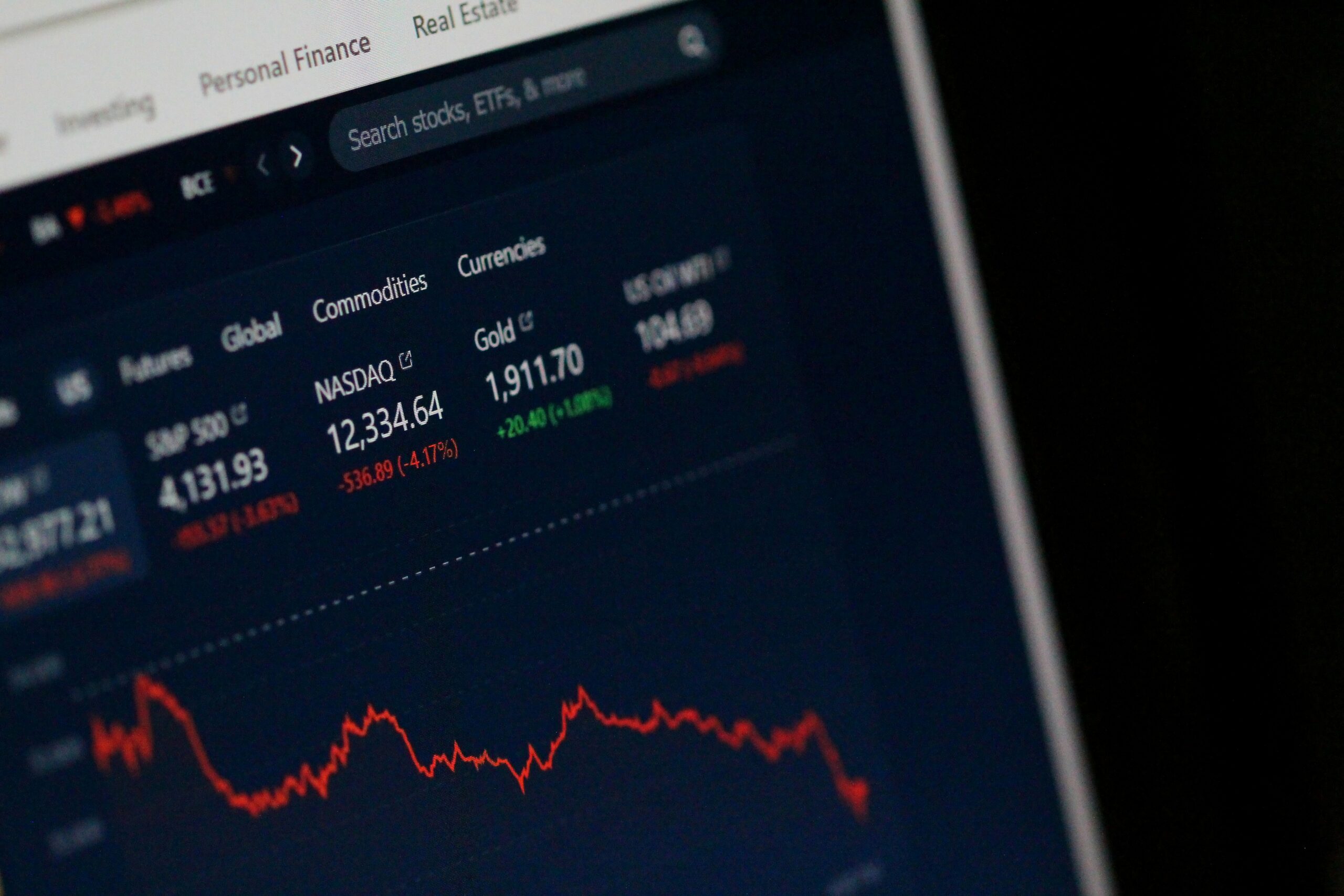
S&P 500 Price Forecast 2025-2030: What Analysts Are Predicting
Disclaimer: This article is for informational purposes only and does not constitute financial advice. Stock market forecasts are inherently uncertain. Always do your own research before making investment decisions.
Every January, Wall Street’s biggest banks publish their year-end targets for the S&P 500. Some hit the mark. Many don’t. But that doesn’t make the exercise pointless — understanding where analysts think the market is heading, and why, can help you make more informed decisions about your own portfolio.
This article breaks down the current analyst consensus for the S&P 500 through 2030, the key factors driving those forecasts, and what history tells us about how reliable these predictions actually tend to be.
Where the S&P 500 Stands Today
The S&P 500 tracks 500 of the largest publicly listed companies in the United States, weighted by market capitalisation. It is widely considered the most accurate barometer of the overall US stock market and serves as the benchmark against which most professional fund managers measure their performance.
After a strong run in 2023 and 2024 — driven largely by enthusiasm around artificial intelligence and a resilient US economy — the index entered 2025 at historically elevated valuations. The cyclically adjusted price-to-earnings ratio (CAPE), a long-term valuation measure, was sitting well above its historical average, prompting some analysts to urge caution while others argued that high valuations were justified by the quality of earnings growth.
What Major Banks Are Forecasting for 2025
Year-end price targets for the S&P 500 vary meaningfully depending on the institution and the assumptions they use. Below is a representative range of analyst forecasts published heading into 2025. Note that these figures reflect projections at time of writing and are subject to revision throughout the year.
| Institution | 2025 Year-End Target | Implied Upside / Downside |
|---|---|---|
| Goldman Sachs | 6,500 | Moderate upside |
| Morgan Stanley | 6,100 | Flat to slight upside |
| JP Morgan | 6,400 | Moderate upside |
| Bank of America | 6,666 | Solid upside |
| Deutsche Bank | 7,000 | Bullish |
| UBS | 6,400 | Moderate upside |
Source: Published analyst reports, Q4 2024. Targets are subject to revision.
Key Factors Driving These Forecasts
Analyst targets don’t come from nowhere. They’re built on a set of assumptions about the economic environment. The main variables shaping S&P 500 forecasts right now are:
- Interest rates: The Federal Reserve’s rate decisions have an outsized impact on equity valuations. Lower rates generally make stocks more attractive relative to bonds and reduce borrowing costs for companies. Most 2025 forecasts assumed the Fed would continue easing — but the pace of cuts remains uncertain.
- Corporate earnings growth: The S&P 500’s price ultimately follows earnings over the long run. Consensus estimates heading into 2025 pointed to earnings growth of around 11-13% for the year. If companies deliver, prices have room to rise. If earnings disappoint, the market will likely re-price downward.
- Artificial intelligence: The AI investment cycle continued to dominate market narratives into 2025. Optimists argue that AI will drive a genuine productivity boom that justifies elevated valuations. Sceptics worry that the capital expenditure is running ahead of proven returns.
- Geopolitical risk: Ongoing conflicts, trade tensions, and political uncertainty in major economies add a layer of unpredictability that most quantitative models struggle to account for.
Looking Further Out: S&P 500 Forecasts to 2030
Forecasting beyond 12 months becomes increasingly speculative, which is why most major banks don’t publish multi-year price targets. That said, we can use historical return data and long-run growth assumptions to model a reasonable range of outcomes.
The S&P 500 has historically delivered annualised returns of around 10% before inflation, or roughly 7% after inflation. Using that as a base case from a starting level of approximately 5,800 at the end of 2024:
- Bear case (5% annual return): S&P 500 around 7,400 by 2030
- Base case (10% annual return): S&P 500 around 9,300 by 2030
- Bull case (15% annual return): S&P 500 around 11,600 by 2030
These are illustrative projections, not predictions. A recession, a major geopolitical event, or a structural shift in the economy could push outcomes well outside this range in either direction.
How Accurate Are Analyst Forecasts, Really?
Honest answer: not very, at least in any given year. A 2023 study of Wall Street year-end targets found that analysts missed the actual S&P 500 close by an average of more than 15 percentage points over the prior decade. In years with major surprises — like 2020 (pandemic) or 2022 (rapid rate hikes) — the misses were far larger.
That doesn’t mean forecasts are useless. They’re valuable as a guide to how professional investors are thinking about the macro environment, and they highlight which risks and opportunities are currently on the radar. What they shouldn’t be used for is precise market timing.
The investors who consistently do well over long periods tend to be those who stay invested through the uncertainty rather than trying to time their entry and exit based on forecasts.
What This Means for a Beginner Investor
If you’re just starting out, here are three practical takeaways from all of this:
- Don’t wait for the perfect entry point. Trying to time the market based on forecasts is a losing game for most people. Time in the market consistently beats timing the market.
- Diversify. A low-cost index fund tracking the S&P 500 gives you exposure to all 500 companies at once. It’s one of the simplest and most effective ways to invest in the long-term growth of the US economy.
- Think in years, not months. The long-run trajectory of the S&P 500 has been upward over every 20-year period in its history. Short-term forecasts matter much less than your investment horizon.
The Bottom Line
Analyst forecasts for the S&P 500 through 2025 and beyond paint a broadly constructive picture, though with meaningful uncertainty around rates, earnings, and geopolitics. The range of outcomes by 2030 is wide — which is exactly why building a diversified, long-term portfolio matters more than betting on any single price target.
If you want to understand how to evaluate the stocks inside the S&P 500 for yourself, our beginner’s guide to reading stock charts is a good place to start.